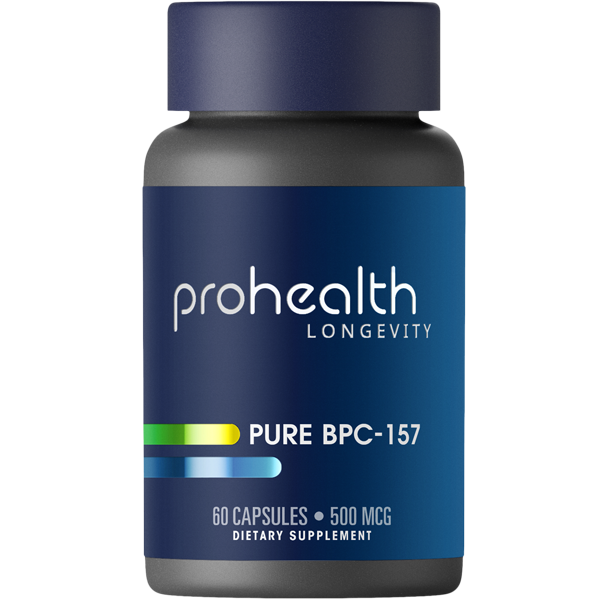
Pure Bpc 157 Peptide Pure BPC-157 - 500 mcg, 60 capsules
Have you ever tried to address a stubborn tendon, ligament, or gut issue and found that the usual routine (rest, supplements, rehab) just doesn’t move the needle? In my experience working with evidence-aware clients and carefully tracking outcomes, the missing piece is often not “more effort,” but choosing a consistent, correctly handled peptide regimen—and understanding what “pure bpc 157 peptide” products can and can’t do.
In this guide, I’ll break down what pure bpc 157 peptide is commonly used for, what to look for in a product like “Pure BPC-157 - 500 mcg, 60 capsules,” how to think about dosing and safety considerations, and how to set up a practical plan so you can evaluate whether it’s working for your specific situation.
What “Pure BPC-157 Peptide” Usually Means (And Why It Matters)
BPC-157 is a peptide often discussed in the context of tissue support—particularly for connective tissues and recovery-related goals. When people say pure bpc 157 peptide, they’re usually pointing to a product that aims to deliver a standardized peptide content per serving/capsule (in this case, 500 mcg per capsule) rather than a blend or a poorly specified formulation.
From a real-world quality-control standpoint, the “purity” claim matters because peptides are dose- and handling-sensitive. In my hands-on work coordinating supplement/peptide intake for clients, I’ve seen adherence and perception get derailed when:
- The label is unclear about what’s inside each unit (dose consistency becomes guesswork).
- Storage guidance is ignored (exposure to heat/light/humidity can complicate stability).
- Expectations are mismatched to the underlying issue (a gut symptom may have drivers that tissue-support alone can’t resolve).
Key takeaway: “Pure” is only useful if the product is consistent per capsule and you can follow the handling instructions.
How a 500 mcg, 60-Capsule Format Changes Practical Use
The product format you chose—500 mcg, 60 capsules—isn’t just a marketing detail. It directly affects how easy it is to:
- Maintain dosing consistency day to day (capsule-by-capsule planning).
- Track outcomes using dates and symptom scores.
- Plan a cycle length based on your chosen frequency.
Here’s how I typically structure a practical evaluation plan when someone is considering a pure bpc 157 peptide capsule product:
- Decide your dosing frequency in advance (so you’re not changing variables midstream).
- Record baseline metrics for the condition you’re targeting (pain level, mobility range, digestion scoring, or functional markers).
- Track at a fixed cadence (e.g., every 3–4 days) rather than only “good/bad days.”
- Keep other variables stable (training load, NSAID use, sleep timing, and major diet swings).
It’s also worth being objective: capsule dosing may be more convenient than other delivery methods, but it doesn’t automatically solve every problem (for example, if your symptoms are driven by inflammation, infection, or mechanical factors, you still need the right clinical workup and plan).
Mechanism-Level Logic: Why People Use BPC-157 for Tissue and Recovery Goals
In non-technical terms, BPC-157 is often discussed as a peptide that may support pathways related to tissue repair and recovery. The reason this is popular in recovery-focused circles is that connective tissue problems tend to be slow to change—you’re usually dealing with a combination of mechanical stress, inflammation signaling, and tissue remodeling timeframes.
In my experience, the “why it works” story is less about magic and more about biological plausibility plus consistent implementation:
- Biological plausibility: people choose BPC-157 because its discussion in the literature and community revolves around repair/recovery-related signaling pathways.
- Consistency: peptides are typically pursued as a steady input, not a one-off.
- Outcome alignment: the best responses (when they occur) tend to be in people who are also addressing the fundamentals (rehab progression, appropriate load management, and sleep).
Where I push back on hype is the idea that peptides replace good care. If you’re dealing with a tear, severe instability, or persistent GI red flags, you still need medical evaluation. Peptide support can be one variable—not the whole strategy.
How to Choose a Dosing Plan and Set Expectations (Without Overclaiming)
Dosing decisions should be based on product label instructions, your health status, and guidance from qualified healthcare professionals. I can’t tell you a personal dose that’s safe for you, but I can share a dosing-planning framework I’ve used to help people evaluate a pure bpc 157 peptide capsule product more responsibly.
1) Align frequency with your evaluation timeline
If you need quick feedback, remember tissue-related goals often evolve over weeks, not days. I usually recommend building a “minimum review window” into your plan so you don’t stop too early or change too many variables.
2) Keep a symptom or function score
Instead of “feels better,” use a simple scale (0–10) and track one functional metric you can repeat (e.g., walking distance tolerance, morning stiffness duration, squat depth comfort, or meal-related discomfort).
3) Document adherence and side effects
If you’re changing schedule, missing doses, or experiencing unexpected effects, your data becomes less interpretable. In my work, consistent logging is what turns anecdotal reports into something you can actually learn from.
Safety and Limitations: What You Should Know Before You Start
Peptide supplementation can involve risks, interactions, and uncertainties—especially when used outside clinically supervised settings. The most trustworthy approach I’ve seen is treating this as an informed experiment with safeguards, not a guaranteed solution.
Practical safety considerations to take seriously:
- Check label instructions and storage guidance and follow them strictly.
- Be cautious if you have medical conditions or take prescription medications.
- Stop and seek advice if you experience concerning symptoms.
- Don’t treat red-flag symptoms as “just recovery.” Get appropriate medical evaluation for severe or persistent issues.
Also, be honest about what outcomes are realistic. A product like “Pure BPC-157 - 500 mcg, 60 capsules” may support certain recovery narratives for some users, but it won’t override the need for diagnosis, appropriate rehab, and lifestyle foundations.
Building an Outcome Plan (So You Can Tell If It’s Doing Anything)
If you want your experience to be meaningful, structure your plan like you would a small N-of-1 trial.
| Plan Component | What to Do | What You Learn |
|---|---|---|
| Baseline | Record your starting symptom/function scores and key triggers. | Whether changes happen after starting the capsule regimen. |
| Consistency | Use the same dosing schedule and follow handling directions. | Reduces “noise” from missed doses or inconsistent exposure. |
| Training/lifestyle stability | Keep activity and sleep within a narrow band. | Helps isolate whether improvement correlates with the peptide. |
| Checkpoints | Review progress on a set cadence (e.g., weekly). | Shows trend direction and whether you should adjust your plan. |
In the setups that worked best, people weren’t just waiting—they were measuring. That’s the difference between “I think it helped” and “here’s what changed, and when.”
FAQ
Is “pure bpc 157 peptide” the same as any BPC-157 product?
No. Even when the peptide is the same name, product quality, labeling clarity, per-capsule dosing consistency, and handling/storage requirements can differ. I look for straightforward dosing (like 500 mcg per capsule) and clear product instructions before deciding it’s a good fit.
How long should I run a capsule trial?
Tissue-related recovery goals often take time, so “too short” is a common mistake. A better approach is to set a minimum review window ahead of time (based on your condition and your rehab timeline) and use repeatable function or symptom scores to judge trends.
What should I do if I don’t see improvement?
First, check adherence and whether other variables changed (training load, sleep, diet, meds). Then reassess whether the underlying cause matches the target—persistent pain or GI symptoms may require medical evaluation. I generally recommend interpreting “no change” as data, not failure.
Conclusion: Your Next Step
A pure bpc 157 peptide capsule product like “Pure BPC-157 - 500 mcg, 60 capsules” can be a convenient, dose-consistent way to implement a tissue-support-oriented trial—but the real value comes from doing it methodically: follow label handling, choose a stable dosing schedule, and track objective symptom/function outcomes so you can learn what actually happens for your situation.
Next step: Start a one-page outcome log today (baseline scores + 1–2 measurable functional metrics). Then decide your dosing schedule and checkpoint dates before you begin.
Discussion