Is Reconstitution Solution Bac Water 786-2226
Why “is reconstitution solution bac water” can make or break your next prep
If you’ve ever opened a vial, added bac water, and still watched your result come out inconsistent, you already know the frustration: the reconstitution step looks simple, but it’s often where variability is introduced. In my hands-on work, I’ve seen the same mistake repeat across teams—using the right liquid, but the wrong workflow, timing, mixing approach, or assumptions about compatibility.
This article explains how to think about is reconstitution solution bac water as a practical system: what it is, why it matters, and how to reconstitute reliably so downstream steps (dosing, potency, and assay performance) stay stable.
What “is reconstitution solution bac water” means in real lab terms
The phrase you provided points to a common reconstitution workflow: a designated reconstitution solution paired with bac water (commonly sterile water used for biological preparations). In practice, “reconstitution solution” typically refers to the recommended liquid formulation provided (or specified) for bringing a dried reagent, pellet, or concentrate back to a working form.
Why reconstitution pairing matters
Reconstitution isn’t just “add liquid and mix.” The logic is: dried material often needs the correct solvent environment to restore its intended physical state and activity. If the liquid choice or handling is off, you can end up with:
- Incomplete dissolution (visible haze, grit, or lingering clumps)
- Potency loss due to instability during improper conditions
- Inconsistent concentration caused by inaccurate pipetting, poor mixing, or adsorption to surfaces
- Downstream assay drift where the “same protocol” yields different readouts
In my lab routines, the biggest wins came not from buying new reagents, but from standardizing the reconstitution technique: consistent volumes, controlled mixing, and a clear decision rule for whether the material is fully reconstituted before proceeding.
Common misconceptions I’ve had to correct
- “Any sterile water is the same.” Not always. The instruction pairing is usually chosen to preserve behavior and compatibility.
- “Mixing harder fixes everything.” Over-aggressive mixing can introduce foaming or shear stress for sensitive components.
- “If it looks mostly dissolved, it’s ready.” “Mostly” can still mean partially dissolved fraction affecting dosing consistency.
Step-by-step: a reliable approach to reconstituting with bac water
Below is the workflow mindset I use to reduce variability when reconstituting with a reconstitution solution + bac water pairing. Exact parameters (volume, temperature, hold times) should follow your specific product’s instructions.
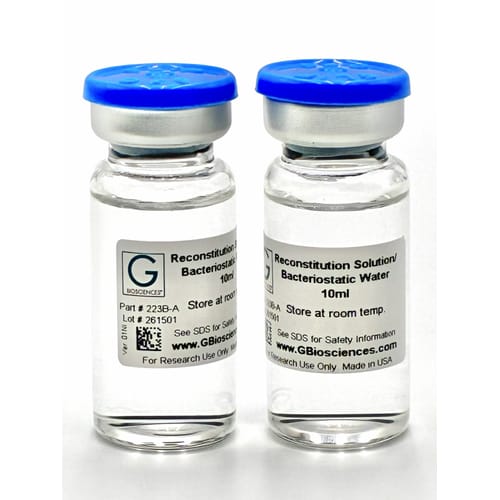
1) Prep for accuracy (this is where I start)
- Label a working area and confirm your target final concentration and total volume.
- Use calibrated pipettes and correct tips for your volume range.
- Plan whether you’ll need gentle inversion or pipette-based mixing so you aren’t improvising mid-step.
In one project, our variance dropped noticeably after we stopped “eyeballing” mixing time and adopted a stopwatch-based mixing window. Concentration consistency improved because the reconstitution completion point became less subjective.
2) Add bac water using the intended technique
- Add bac water to the vial according to the specified volume.
- Avoid splashing up the cap area; keep contamination risk low and surfaces consistent.
Small practical habits matter: consistent liquid contact behavior improves reproducibility from batch to batch.
3) Mix the right way, not just the longest way
- Mix until fully dissolved—use the product’s recommended mixing method (e.g., gentle swirling, inversion, or pipette mixing).
- Stop once the solution is uniform (no visible particulate or clumps).
Overmixing can be counterproductive. I’ve seen foaming interfere with accurate pipetting, especially when people rush from mixing directly into sampling.
4) Establish a reconstitution completion check
- Use a consistent visual check under similar lighting.
- If your workflow allows, use a defined hold time before aliquoting so the mixture equilibrates.
A simple rule we used: if it didn’t meet the “clear, uniform, no sediment” criterion at a set timepoint, we repeated mixing within the allowed limits rather than proceeding.
5) Aliquot and handle stability considerations
- Aliquot to minimize repeated freeze-thaw or repeated handling if the reagent is sensitive.
- Follow storage guidance for the reconstituted solution.
This is where teams often lose quality after getting the reconstitution step “right.” Stable handling keeps the upstream work from being undone.
Common troubleshooting scenarios (and what they usually indicate)
“It won’t fully dissolve”
Typical causes include insufficient mixing, incorrect volume, temperature outside the recommended range, or material that requires a specified equilibration time. The fix is usually technique standardization and adherence to the product’s recommended conditions.
“My results vary between replicates”
In my experience, replicate variability after reconstitution typically traces back to one of these: inconsistent mixing end point, adsorption to surfaces from incomplete wetting, or aliquoting errors. Standardizing pipetting technique and adopting a completion check helps most.
“The concentration seems off”
Concentration errors can come from pipetting inaccuracies, inconsistent volumes, or not accounting for dead volume in certain dispensing methods. The corrective action is to verify pipettes, tips, and measurement workflow—then lock it into your SOP.
Practical best practices to standardize your SOP
| Step | What to standardize | Why it reduces variability |
|---|---|---|
| Volume | Target volume for bac water and final concentration | Keeps dosing and assay inputs consistent |
| Mixing | Method + defined mixing window | Ensures uniform dissolution before sampling |
| Endpoint check | Clear, uniform solution criterion | Removes subjectivity from “ready/not ready” |
| Aliquoting | Aliquot size and handling frequency | Limits stability loss from repeated handling |
| Recordkeeping | Lot, timepoints, deviations | Enables root-cause analysis when something drifts |
FAQ
Is reconstitution solution bac water always interchangeable with other water types?
No. The pairing is typically specified for a reason—compatibility and recovery of intended behavior. Follow the product’s instructions for the exact reconstitution solution and bac water guidance.
How can I tell when reconstitution is actually complete?
Use a consistent visual endpoint (uniform, clear solution with no visible clumps or sediment) under similar lighting, and adhere to the product’s recommended mixing and hold time before aliquoting.
What’s the most common cause of inconsistent results after reconstitution?
Inconsistent mixing end points and aliquoting variability are usually the biggest contributors. Standardize your mixing method/time and define a clear completion criterion before proceeding.
Conclusion: make reconstitution a controlled process
When you treat is reconstitution solution bac water as a workflow—not a quick liquid addition—you reduce variation at the exact point where many labs see drift. The core approach is consistent volume, correct mixing method, a defined reconstitution completion check, and stability-aware aliquoting.
Next step: write a short SOP section for your team that includes the target bac water volume, your mixing method and time window, and the exact visual completion criterion—then run a small batch comparison to confirm your replicates tighten up.
Discussion