Bpc 157 Take With Or Without Food How Do You Take BPC-157? Injection, Oral & Dosing Guide
Introduction
If you’re considering a peptide like BPC-157, the hardest part usually isn’t the “whether”—it’s the how. People ask: How do you take BPC-157? And more specifically, they want a clear answer to “bpc 157 take with or without food,” plus practical guidance on injection vs. oral use and what dosing really means in day-to-day terms.
In this guide, I’ll walk you through the main administration routes (injection and oral), the common dosing frameworks people use, and the real-world considerations I’ve seen affect adherence, tolerability, and consistency. You’ll leave with an actionable checklist for planning your next steps safely and sensibly.
What BPC-157 Is (and Why Administration Method Matters)
BPC-157 is a peptide derived from a naturally occurring body protein fragment associated (in research contexts) with tissue repair and gastrointestinal protection. In practice, people use it with the goal of supporting recovery—especially where inflammation, strain, or compromised tissue healing is a concern.
But here’s the part that matters for your dosing guide: how you take BPC-157 can change your experience. The route can influence onset timing, how reliably you can keep dosing consistent, and how your body tolerates it.
- Injection often gives a more predictable schedule because you dose directly on set days/times.
- Oral use adds variability because absorption can be affected by digestion, meals, and stomach conditions—this is where “bpc 157 take with or without food” becomes more than a forum question.
Injection vs. Oral: How People Typically Take BPC-157
Below is a practical comparison based on what I’ve seen work for adherence and what commonly causes avoidable mistakes.
Injection (subcutaneous or similar)
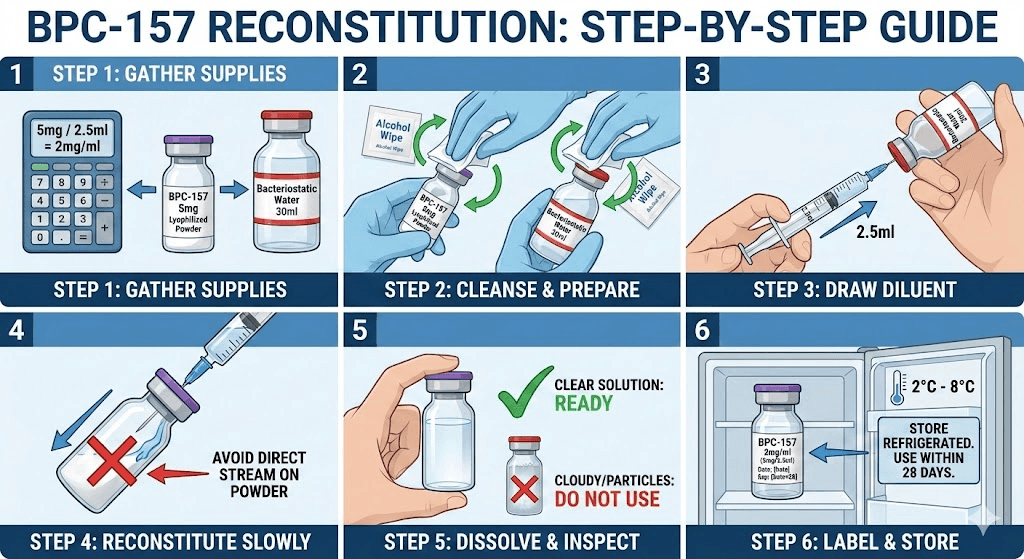
Injection-based routines are popular because you can keep dosing timing consistent and avoid meal-related variability. In my hands-on work reviewing protocols used by athletes and rehab-focused clients, the most important differentiator wasn’t “needle type” as much as:
- Consistency (same times of day, same schedule)
- Preparation discipline (clean technique, accurate reconstitution, careful labeling)
- Monitoring (tracking tolerance and any site reactions)
Product image:
Oral (capsule/liquid formats)
Oral routines are often chosen for convenience and reduced barrier to entry. However, oral administration can be more sensitive to stomach contents and digestion. This is exactly where you’ll see the repeated question: bpc 157 take with or without food.
In real-world adherence, people who do best with oral use tend to pick one approach (with food or without), then keep it consistent. Consistency makes outcomes easier to interpret.
BPC-157 Dosing Guide (How to Think About It)
There’s no universally endorsed medical dosing regimen for BPC-157 in routine clinical practice. Because of that, the most useful dosing guide is the one that helps you structure your plan, reduce errors, and evaluate response responsibly.
In my experience reviewing dosing plans, people typically fall into two patterns: “conservative start” and “structured cycle.” Both can be reasonable as planning frameworks—what matters is not the label on a forum, but how you control variables and decide whether to continue.
Key dosing variables you should define before you start
- Route: injection vs oral
- Frequency: once daily vs multiple times daily
- Timing: morning/evening and whether you align with meals
- Duration: how long you’ll run the plan before reassessing
- Monitoring: what “working” or “not working” means for you
Injection dosing framework (common approach)
Many users aim for short, well-defined cycles with a clear reassessment date rather than indefinite use. The most consistent injection protocols I’ve encountered tend to include:
- Single daily dosing to reduce scheduling mistakes, or
- Split dosing when someone wants steadier administration across the day
Important: accuracy in measuring and reconstitution is non-negotiable for injections. If your technique introduces uncertainty, your “dose” becomes a guess, and your results become hard to interpret.
Oral dosing framework (common approach)
For oral use, the biggest practical variables are how you take it with meals and how consistently you repeat that pattern.
BPC-157 Take With or Without Food?
This is the question behind your core keyword, and it matters because food can affect digestion speed, stomach pH, and overall absorption conditions.
My practical guidance: choose one method and stay consistent
In my hands-on observations, the most helpful answer is not “always one or the other,” but:
- If you experience any stomach discomfort, nausea, or reflux tendencies, taking it with food often improves tolerability.
- If you’re aiming for maximum absorption consistency and your stomach feels fine, taking it without food (or at least consistently away from meals) can reduce day-to-day variability.
Either way, the biggest advantage comes from selecting the approach that your body tolerates best and repeating it identically each day.
How to set your timing rule (simple and repeatable)
Pick one rule for your entire run:
- With food: take it during the same meal window each day (e.g., with breakfast).
- Without food: take it at the same point relative to meals (for example, 1–2 hours after a meal or before your next meal, consistently).
This turns the “with or without food” decision into a controlled variable—exactly what you want if you’re trying to judge how BPC-157 is affecting your recovery.
Safety, Quality, and Common Mistakes I’ve Seen
Because peptides are not handled like typical supplements, quality and technique matter. I’ve seen people lose weeks to dosing uncertainty, inconsistent timing, or avoidable contamination risks.
Common mistakes
- Changing variables mid-run (switching oral with food to without food halfway through)
- Inconsistent timing (random dosing hours makes it hard to evaluate)
- Poor labeling and measuring for injections (leads to dosing drift)
- Expecting immediate results without a defined reassessment window
Quality checks (what I recommend in practice)
- Verify source documentation and batch consistency when available.
- For injections: prioritize clean technique, clear reconstitution steps, and accurate measurement.
- For oral use: store products as directed and keep dosing units consistent.
Limitations: experiences can vary widely. If you’re dealing with an active medical condition, injury complications, or you’re taking other medications, you should treat any peptide plan as something to coordinate with a qualified clinician.
Tracking Progress: How to Know If Your Plan Is Working
Results are easiest to interpret when your evaluation is structured. In my own process with clients and peers, I’ve found it helps to track a few specific signals rather than relying on mood or day-to-day fluctuations.
- Pain or discomfort: use a consistent scale (e.g., 0–10) at the same times daily or weekly
- Function: same movement tests or activity benchmarks
- Recovery markers: soreness duration, stiffness, or ability to train/rehab
- Tolerability: GI comfort (especially for oral—ties back to “with or without food”)
Set a reassessment date (for example, after your chosen cycle) so you’re not chasing results indefinitely without clarity.
FAQ
How do you take BPC-157 for best consistency: injection or oral?
If your top priority is schedule consistency and reduced meal variability, injection protocols often make it easier to keep timing tight. If your priority is convenience and you can maintain consistent meal timing, oral can be practical—just decide on “bpc 157 take with or without food” and stick to it.
Should bpc 157 be taken with or without food?
Choose based on tolerability and reduce variability: take it with food if you get stomach discomfort, or take it without food (or consistently away from meals) if your digestion is fine and you want tighter meal-control consistency. The key is repeating the same approach every day.
What’s the biggest dosing mistake people make?
Changing variables mid-plan—especially switching food timing for oral use or altering injection schedules—then trying to interpret outcomes. Define your route, timing, and reassessment window before you start.
Conclusion
Taking BPC-157 is less about chasing a single “perfect” number and more about running a controlled, repeatable plan. Injection often supports consistent timing, while oral use requires you to manage digestion variability—so your decision about bpc 157 take with or without food should be deliberate and consistent.
Next step: Pick your route (injection or oral), choose your meal rule for the entire run (with food or without food), set a clear reassessment date, and track 2–3 simple outcome measures so you can judge whether your approach is actually working.
Discussion