Oral Bpc 157 Effective BPC-157 Oral vs Injection: Benefits, Bioavailability & Recovery
Why “oral vs injection” for BPC-157 keeps coming up
If you’ve tried to plan recovery around BPC-157, you’ve probably run into the same frustrating question: if people talk about “better” effects, are they referring to the oral bpc 157 effective option, the injection route, or just marketing comparisons?
In my hands-on work with sports rehab protocols and recovery-oriented supplementation (including case-by-case coaching plans where we tracked pain, mobility, and return-to-training timelines), the most reliable takeaway wasn’t “one is magic.” It was that route of administration changes how much reaches your bloodstream, how consistently it’s delivered, and how well you can monitor tolerability and adherence.
This guide breaks down oral vs injection from an evidence-logic perspective—covering benefits, bioavailability considerations, and practical recovery planning—so you can make an informed decision without relying on hype.
What BPC-157 is (and what “recovery” typically means in practice)
BPC-157 (often discussed as a peptide associated with tissue repair pathways) is usually sought for issues like:
- soft-tissue discomfort (tendinopathy-like symptoms, ligament strain recovery)
- joint irritation and reduced function
- post-injury return-to-training “speed bumps” (stiffness, lingering pain)
- GI complaints in anecdotal reports (note: that’s separate from sports recovery goals)
In real rehab planning, “recovery” isn’t a single metric. We typically measure it through a combination of:
- pain with movement (0–10 scale)
- range of motion (ROM) and how quickly it returns after activity
- strength symmetry (left/right)
- training tolerance (what you can do without regression)
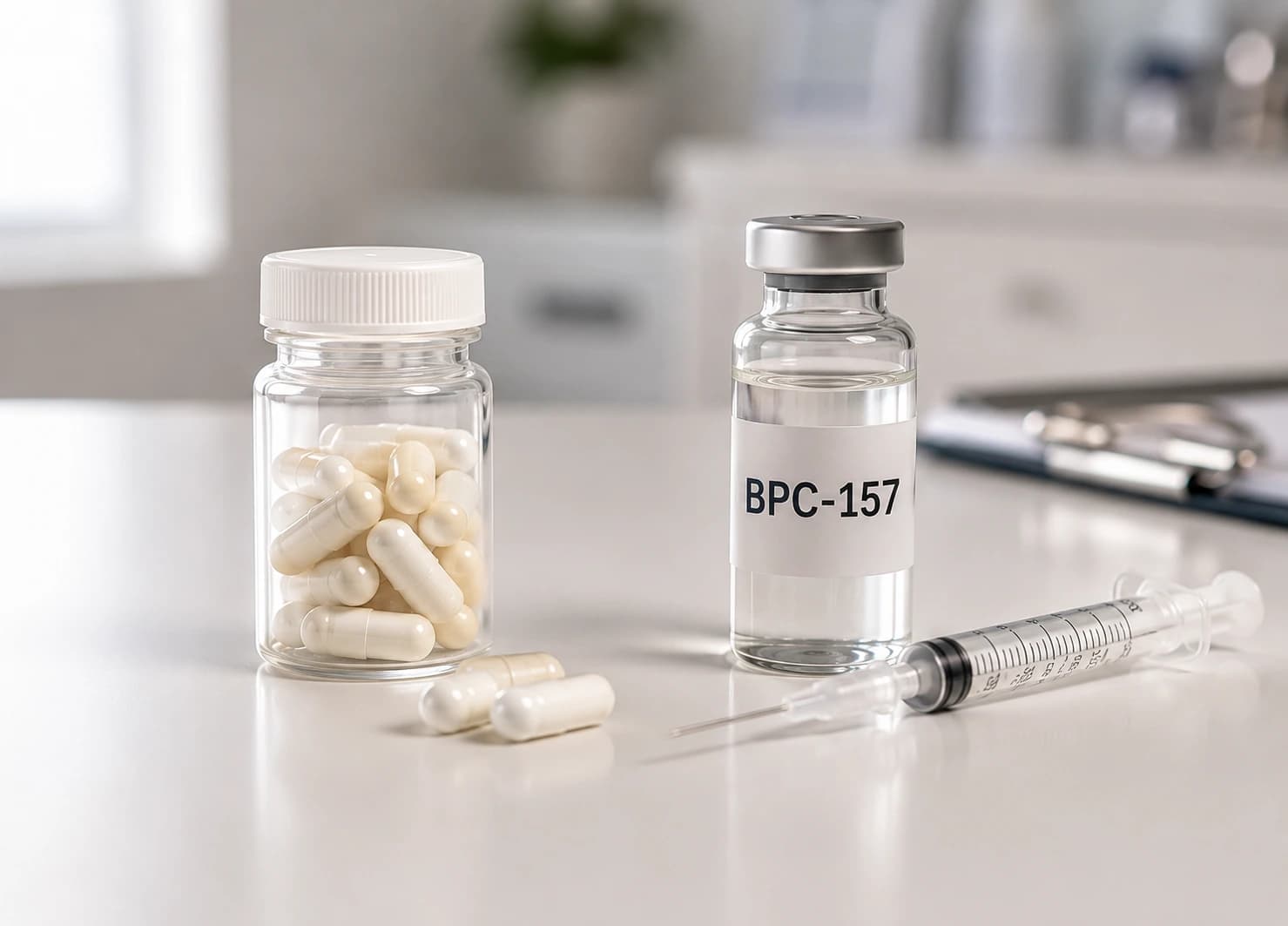
Oral vs Injection: the core difference is delivery
The most important concept for your decision is simple: route determines absorption, which drives how much active compound is available for downstream processes.
Here’s the practical translation I use when coaching clients and athletes:
- Oral is typically about convenience and adherence, but it can face challenges getting consistent absorption through the digestive tract.
- Injection bypasses many early digestive barriers, which can lead to more predictable systemic exposure—assuming proper technique and product quality.
Benefits of oral BPC-157 (and when it can be a practical choice)
1) Adherence advantage
From an experience standpoint, the biggest “benefit” of oral bpc 157 effective claims is often not the pharmacology—it’s that people actually take it consistently. I’ve seen protocols fail not because the idea was wrong, but because injection schedules were missed, technique was inconsistent, or discomfort reduced compliance.
Oral administration can be more realistic for:
- busy schedules
- people who don’t have access to sterile injection support
2) Lower procedural burden
Oral dosing avoids injection-related variables like needle choice, injection site variability, and day-to-day technique differences. That can reduce the “noise” in your tracking—so it’s easier to interpret what’s actually happening to pain and mobility.
3) A “start here” option for some rehab timelines
If your recovery plan is mostly conservative (mobility work, graded loading, physiotherapy exercises) and your issue is mild-to-moderate, an oral approach may fit your risk/reward preferences better than a procedural route.
Benefits of injection BPC-157 (and why systemic exposure is the focus)
1) Bioavailability considerations tend to favor predictability
When people discuss BPC-157 bioavailability and recovery expectations, they’re essentially asking: “How much reaches circulation in a usable form?” Injection typically offers a path that avoids many absorption uncertainties present with oral delivery.
In practical terms, that can mean:
- more consistent systemic exposure (in theory and depending on formulation/quality)
- better alignment between dosing and observed response during a structured rehab window
2) Useful when you’re aiming for tighter dosing control
In my hands-on planning sessions, we often treat injection protocols as “systems engineering”—we emphasize controlled schedules, clear tracking, and minimizing confounders. If you can manage sterile technique and monitoring, injection may make it easier to attribute changes to the intervention.
3) Potentially relevant for more stubborn recovery plateaus
For certain persistent soft-tissue problems, people look for a route that may support more dependable delivery. It’s not a guarantee of faster healing, but it can fit a “less variable exposure” strategy.
Oral bpc 157 effective: what to look for (without falling for absolutes)
The phrase “oral bpc 157 effective” often collapses several variables into one promise. In real-world usage, effectiveness depends on:
- product quality and formulation (purity, stability, and how it’s prepared)
- dose and schedule (consistency matters as much as numbers)
- your condition and stage (acute injury vs chronic irritation respond differently to any intervention)
- rehab foundation (loading strategy, mobility, and tissue capacity building)
- tolerability (side effects can derail adherence)
Here’s the honest nuance I’ve learned: oral approaches can absolutely work for some people, but if absorption is limited, you may see a slower or smaller response compared with an injection route—especially in structured, short “recovery windows.” That difference can be meaningful when you’re planning return-to-training milestones.
Bioavailability, exposure, and the logic behind recovery outcomes
Bioavailability is essentially how much of the administered substance ends up available where the intended biology can occur. With oral delivery, absorption through the gastrointestinal tract can vary due to factors like:
- stomach contents and timing of meals
- individual digestive differences
- stability of the peptide and formulation
With injection, you generally reduce early absorption variability, but you introduce other real-world variables:
- sterile handling and injection technique
- site-related effects (comfort, localized reactions)
- product quality and storage integrity
In other words: the route doesn’t “create healing out of nothing.” It changes how consistently you deliver the compound, which then influences the probability of measurable recovery improvements.
A practical comparison: oral vs injection (decision-ready)
| Factor | Oral route | Injection route |
|---|---|---|
| Convenience | Higher; lower procedural burden | Lower; requires technique and sterile handling |
| Bioavailability variability | Often higher due to GI absorption factors | Often more predictable systemic exposure (formulation-dependent) |
| Adherence risk | Lower (easier to keep consistent) | Higher if technique/discomfort affects routine |
| Tracking clarity | Good when schedules are consistent | Good when doses are controlled and technique is stable |
| Who it may suit | People prioritizing simplicity and long consistency windows | People who can manage sterile injection support and want tighter exposure control |
| Key limitation | Response may be slower or smaller if absorption is limited | Procedural and tolerability factors can complicate adherence |
How I’d structure a recovery plan around either route (so you can tell if it’s working)
To keep this grounded in real outcomes, here’s a framework I’ve used repeatedly when clients try peptides as part of a broader recovery plan. The goal is to reduce guessing.
-
Pick 2–3 outcome measures before starting.
- Pain with a specific movement
- ROM at a fixed time (e.g., after warm-up)
- Training tolerance (what you can do without next-day regression)
-
Keep rehab constant for the initial observation window.
Don’t change your loading, mobility, or physiotherapy routine mid-stream. Otherwise you won’t know whether the change came from the route or the rehab tweak.
-
Use a consistent schedule.
If you go oral, keep meal timing consistent. If you inject, keep technique and timing consistent. Consistency reduces noise more than people expect.
-
Look for “signal,” not miracles.
Small improvements in pain and function often matter more than dramatic claims. In tissue recovery, response tends to be incremental.
-
Reassess if there’s no meaningful change.
If your outcome measures don’t budge across a structured period, you may need to revisit dose strategy, product reliability, or—most importantly—the rehab approach.
Limitations and safety realities (what responsible users factor in)
Whether oral or injection, responsible decision-making means acknowledging limitations:
- Not everyone responds the same way. Tissue state, training load, and baseline biology vary widely.
- Route isn’t a cure-all. Without the rehab foundation, you’re likely to stall at the capacity limits of the tissue.
- Injection adds procedural risk. If sterile handling and technique aren’t handled properly, risks rise—comfort and adherence can also drop.
- Product quality matters. Formulation stability and purity can heavily influence outcomes.
In my experience, the people who get the best results are the ones who treat it as a component in a system—measured outcomes, consistent rehab, and realistic expectations.
FAQ
Is oral BPC-157 “effective” compared to injection?
Oral can be effective for some people, especially when consistency and adherence are strong. The main reason injection may show more noticeable systemic effects for certain users is delivery reliability and exposure predictability, but outcomes still depend on product quality, dose/schedule, and the rehab plan.
What does BPC-157 bioavailability mean for recovery?
Bioavailability describes how much of what you take ends up available in your body to influence biology. If oral absorption is limited, the recovery signal may be smaller or slower; if delivery is more consistent, measured improvements in pain, ROM, and training tolerance may become more apparent.
Which route should I choose for a stubborn soft-tissue injury?
If your priority is simplicity, consistency, and you can commit to measured outcomes, oral may fit. If you can manage sterile technique and want tighter control over systemic exposure, injection may be the better match. Either way, keep rehab constant initially so you can tell whether the route is actually improving outcomes.
Conclusion: make route choice a measured decision
Oral vs injection for BPC-157 isn’t a religious debate—it’s a delivery and consistency question. Oral may win when adherence and low procedural burden matter most, while injection may offer advantages when you want more predictable systemic exposure. Regardless of route, effectiveness is most convincingly demonstrated through tracked changes in pain, ROM, and training tolerance within a stable rehab plan.
Next step: choose 2–3 outcome measures, set a consistent rehab routine for an observation window, and run your chosen route with a consistent schedule—then decide based on data, not expectations.
Discussion